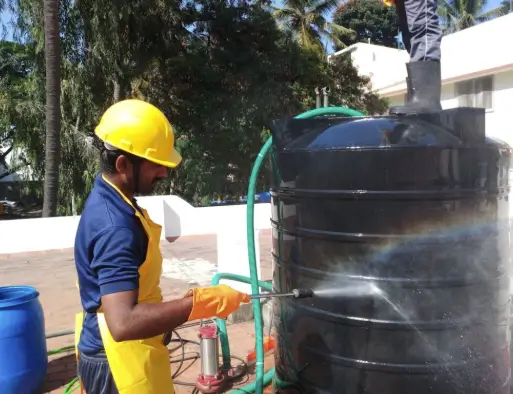
Maintaining water tanks requires a systematic approach. Regular inspections assess structural integrity, valves, seals, and potential leaks, with attention to drainage patterns and color changes that indicate contamination or degradation. A disciplined cleaning regimen targets sediment removal while meeting filtration standards and recording parameters for traceability. By integrating sediment control and standardized cleaning rituals, one can verify performance against safety criteria before planning preventive maintenance and scheduling. The next steps reveal how to implement these checks efficiently.
Inspect Your Tank System: Regular Checks and What to Look For
Regular inspections of a water tank system are essential to ensure safety, reliability, and performance. The evaluation emphasizes structural integrity, valve and access points, and seal conditions. Observations focus on drainage patterns and color changes indicating contamination or material degradation. Documentation records findings, recommended actions, and timelines, enabling proactive risk mitigation while preserving system performance and user freedom for informed maintenance decisions.
Clean and Maintain: Step-by-Step Cleaning, Sediment Control, and Filtration
Maintaining a water tank system requires a methodical cleaning regimen, sediment control, and filtration management that build on prior assessments of structural integrity and access points.
The procedure outlines step-by-step cleaning, targeted sediment removal, and adherence to filtration standards, documenting parameters and timing.
Cleaning rituals are standardized, verification checks conducted, and performance benchmarks compared against defined efficiency and safety criteria for transparent operation.
Prevent Leaks and Cracks: Sealing, Repairs, and Material Health
Prevent leaks and cracks in water tanks through a structured approach to sealing, repairs, and material health assessment. The analysis emphasizes sealing techniques, where surface preparation and compatible sealants minimize seepage. Crack prevention relies on load assessment and environmental factors, while repairs prioritize minimally invasive methods and proper curing. Material health evaluates corrosion potential, coating integrity, and long-term durability for reliable performance.
See also: The Race for Innovation: Who Will Lead the Tech Future?
Scheduling, Troubleshooting, and When to Call a Pro
Scheduling and troubleshooting activities for water tanks require a structured approach that builds on prior sealing and material health considerations.
The section outlines scheduling best practices, triggers for routine checks, and objective criteria to initiate expert evaluation.
Troubleshooting tips focus on sensor accuracy, valve operation, and sediment buildup.
When issues exceed defined thresholds, calling a pro ensures compliant remediation and documented maintenance.
Conclusion
In summation, the maintenance program aligns tightly with observed outcomes—coincidence underscores the linkage between disciplined procedure and system reliability. Regular inspections consistently reveal early warning signs, and timely cleaning correlates with sustained filtration performance. Sealing integrity and material health degrade at predictable rates, reinforcing the need for proactive repairs. Scheduling and troubleshooting converge with documented actions, ensuring risk is managed before failures materialize. Thus, disciplined practice and monitoring repeatedly co-occur, producing durable, safer water-tank operation.